
Marcel Wanders: The Art of the Extraordinary Interior
Marcel Wanders has spent decades challenging the idea that an interior should simply be beautiful. For the Dutch designer, a space can be theatrical, emotional, playful, mysterious, and even slightly surreal. Through his Amsterdam based studio, Wanders has created interiors for hotels, restaurants, residences, retail spaces, and cultural environments around the world, developing a design language that is immediately recognisable without being tied to a single aesthetic. His interiors are designed to leave an impression, turning the act of entering a room into an experience in itself.

A World of References
Wanders rarely treats history as something that belongs behind glass. Instead, classical ornament, traditional craftsmanship, folklore, architecture, and cultural references are brought into conversation with contemporary forms. His interiors often feel as though several different eras have been folded into the same room, creating unexpected combinations of old and new. At Mondrian Doha, for example, Arabic writing, local patterns, historic souks, falcons, stained glass, mosaics, and monumental decorative elements become part of a highly contemporary hospitality environment.

The Theatre of Hospitality
His hotel interiors perhaps offer the clearest expression of this approach. At Mondrian Doha, every space has its own identity while remaining connected to a larger narrative, from the lobby and restaurants to the suites and penthouses. The Kameha Grand Zurich follows a similarly expressive approach, while Andaz Amsterdam Prinsengracht places Wanders’ design language within the character of a historic canal house. These are interiors designed as sequences, where each room offers something different and the journey through the building becomes part of the experience.

Fantasy in Material and Form
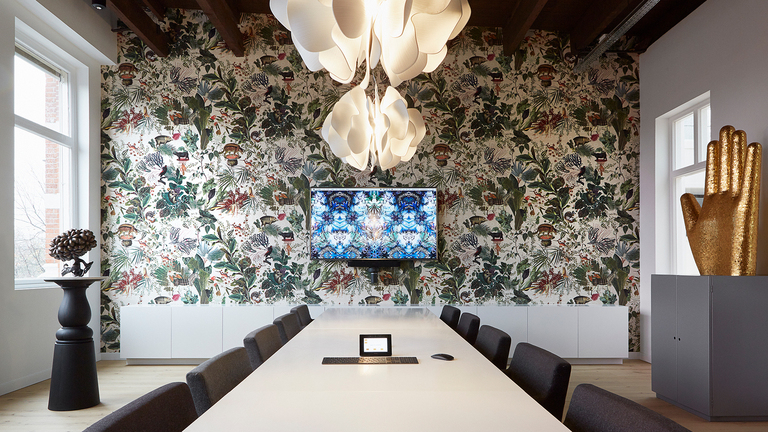
Furniture, lighting, surfaces, and architectural details are rarely treated as secondary elements in a Wanders interior. They become characters within the story. Oversized chandeliers, sculptural furniture, intricate carpets, ornamental screens, dramatic ceilings, and bespoke objects can completely change the perception of a room. His own studio in Amsterdam similarly functions as more than a conventional workplace, bringing together bespoke furnishings, one of a kind objects, and exhibition pieces in an environment that feels closer to a living gallery.
Beauty with a Human Touch
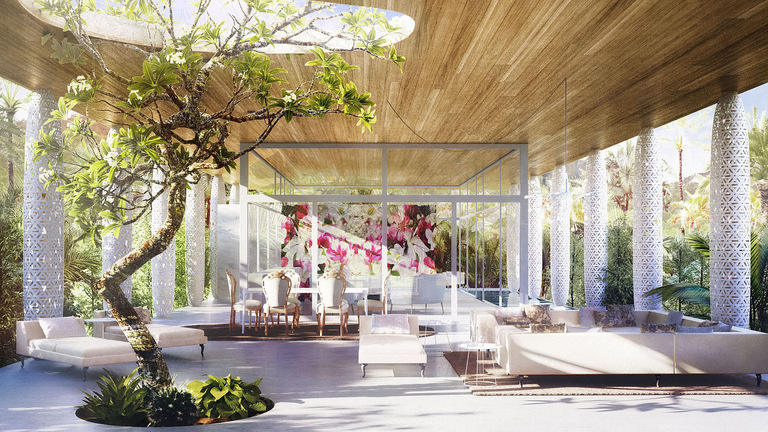
Behind the visual richness is a recurring interest in making design feel human. Wanders has consistently explored the relationship between beauty, craftsmanship, memory, and emotion, resisting the idea that contemporary interiors need to be cold or purely functional. His work often uses softness, ornament, humour, texture, and familiar historical references to create spaces that invite curiosity. Even when the scale becomes spectacular, there is usually something tactile or recognisable that brings the experience back to the person inhabiting it.

Interiors as Storytelling
Perhaps the most distinctive quality of Marcel Wanders’ interiors is their willingness to tell stories. A room can suggest a different era, evoke a distant culture, introduce an unexpected fantasy, or simply create a moment of wonder. His approach refuses the idea that contemporary design has to choose between sophistication and imagination. Instead, architecture, furniture, art, lighting, and craftsmanship are brought together as parts of a larger narrative. The result is an interior design practice that treats space not as a backdrop for life, but as one of the things that makes life memorable.

//